Why AC Gearmotors Fail in Washdown
Most stainless AC gearmotors last one to two years in washdown. Here is the physics behind the failures and what a gearless, oil-free direct drive changes.
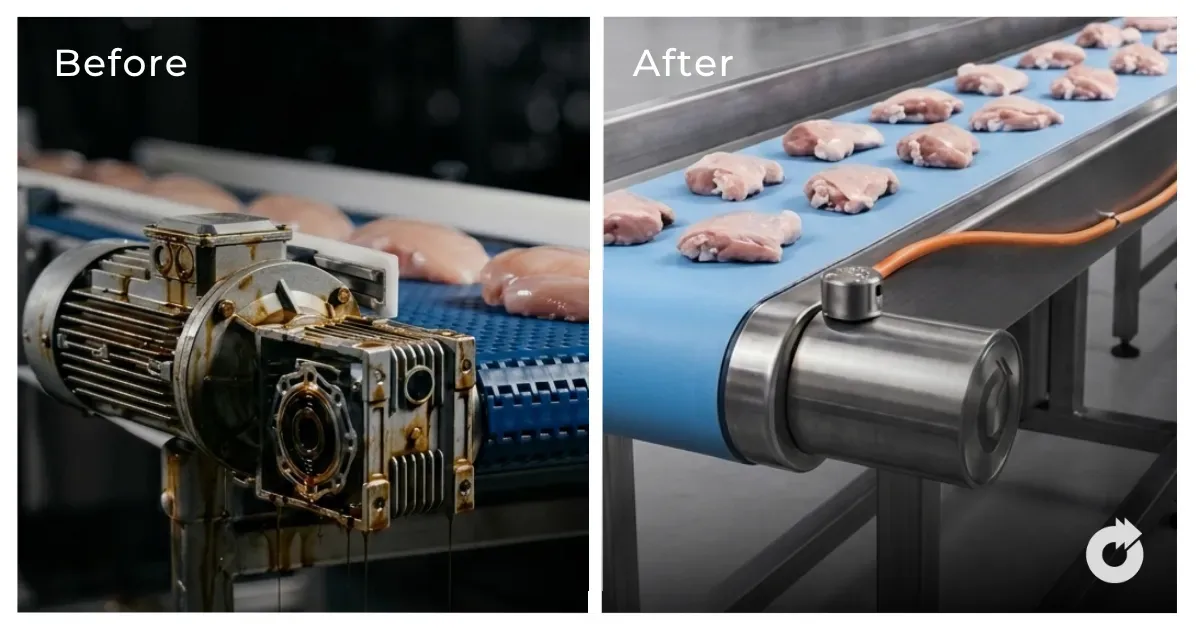
AC gearmotors fail in washdown because they are built around parts that hate water and temperature swings: oil, gears, seals and breathers. Every hot production run followed by a cold washdown pulls moisture past the seals. In most plants that means a replacement every one to two years. A gearless, oil-free direct drive removes those failure points instead of trying to protect them.
What actually happens inside a gearmotor during washdown?
Walk any food plant and talk to the maintenance team. The story is almost always the same. The motor says IP69K on the nameplate, yet there is a spare sitting on the shelf because everyone knows it will be needed.
Here is the reason. During production the motor and gearbox heat up and the air and oil inside expand. Then the line stops and gets hit with cold, high-pressure water and chemicals. The housing cools fast, the inside pressure drops, and the unit literally pulls a breath of wet air past its seals. Engineers call this thermal breathing. Do it twice a day for a year and you have water in the oil, rust on the bearings and a seal that has given up.
Why doesn’t IP69K stop it?
IP69K tells you the enclosure survived a specific spray test when it was new. It says nothing about what happens after hundreds of heat and cool cycles, after the seals harden, or after somebody points a hose straight at the shaft lip. A stainless shell wrapped around an oil-filled gearbox is still an oil-filled gearbox. The rating describes the jacket, not the design underneath it.
What are the common failure signs?
-
Oil or grease residue around the output shaft and breather.
-
Milky or discolored gearbox oil at service time.
-
Bearing noise that starts a few weeks after a hard sanitation cycle.
-
Rising current draw as the gearbox loses efficiency.
-
Replacing the same position on the line again and again.
What does a direct drive change?
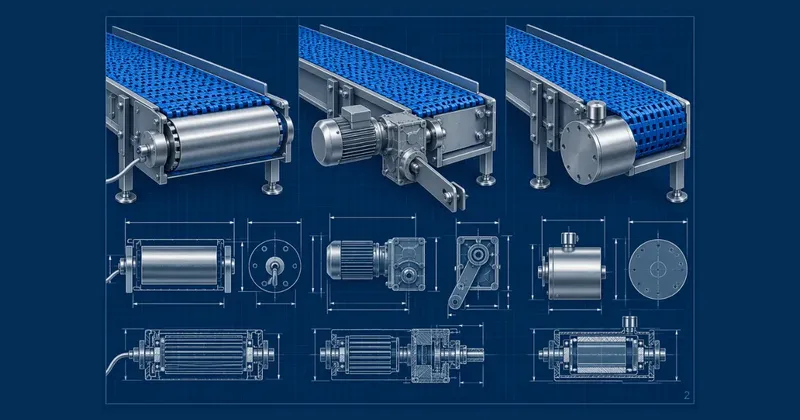
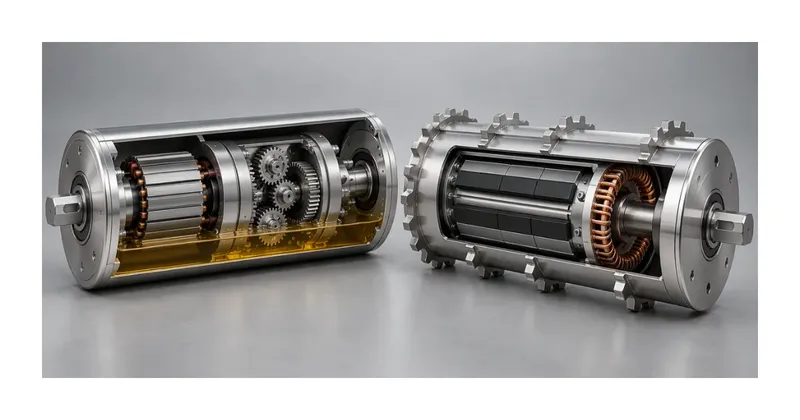
The One Motion SideDrive takes the opposite approach. It is a permanent magnet direct drive motor with no gearbox and no oil anywhere inside. Torque is made directly at the shaft, so there is no high-speed input shaft to seal, no gear set to lubricate and no oil reservoir to breathe. It is designed for washdown from the start instead of being adapted to survive it.
That design choice is why we back SideDrive with a 3-year warranty, and why our installed units have a proven service life of more than six years in real washdown production. Compare that with the one to two years most plants get from a stainless AC gearmotor.
How do you know if your line is a good candidate?
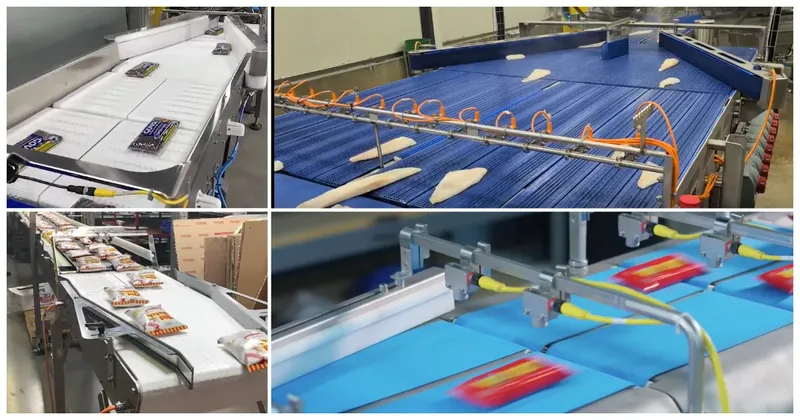
Start with the positions you replace most often. If a drive sits in direct spray, sits above exposed product, or runs a lot of stop and start cycles, it is usually the first one worth converting. SideDrive mounts on the standard NEMA 56C face and torque arm, so the swap is a retrofit, not a redesign.
FAQ:
How long does a stainless steel gearmotor last in washdown?
In most food plants we visit, one to two years, and less in aggressive sanitation zones. Life depends on spray direction, chemical use and how many heat and cool cycles the unit sees per day.
Is food-grade oil safe in a gearbox above the product?
Food-grade oil reduces the consequence of a leak, but it is still oil above an open product zone. Removing the oil removes the risk entirely.
What warranty does One Motion SideDrive carry?
SideDrive is backed by a 3-year warranty, and installed units have a proven service life of more than six years in washdown.
Count how many gearmotors you replaced last year, then compare at sidedrive.com (opens in a new tab).
Found this useful? Share it with your team.