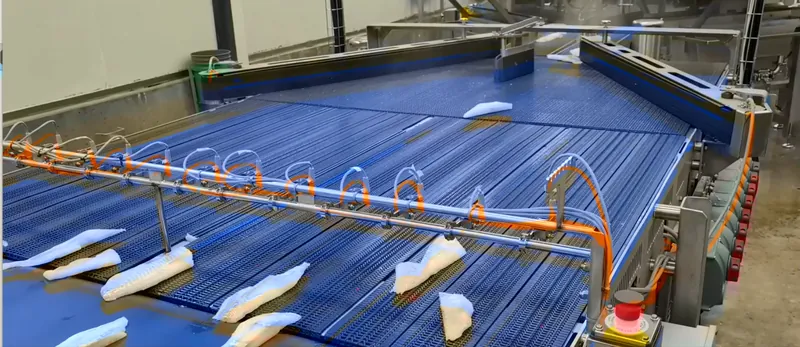
Revolutionizing Smart Feeding: The Rise of Powered Hubs and Arrays
How Powered Hubs replace servo, gearbox and bearing stacks on cantilevered belts, and how arrays of them make compact, independently controlled smart feeders.
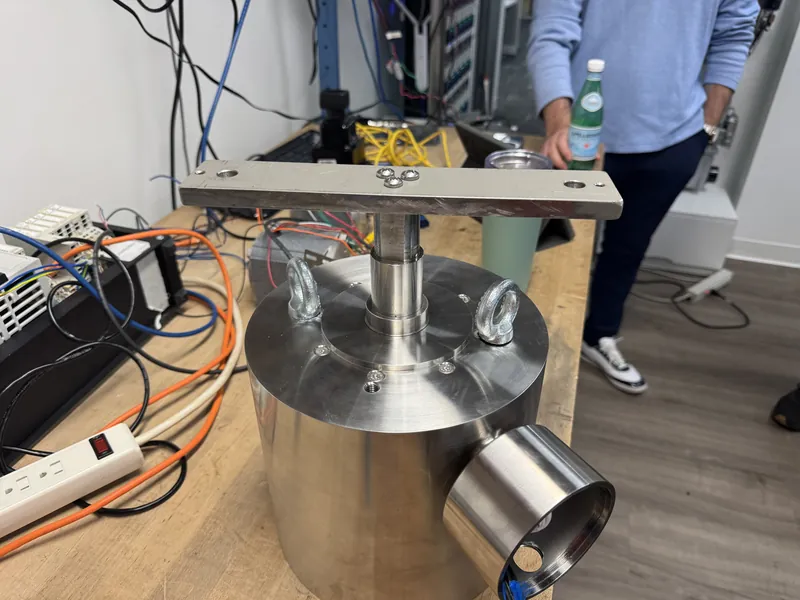
Traditional cantilevered belt systems rely on a mechanical hub, bearings, seals, a planetary gearbox, and a servo motor. This setup often includes 14+ bearingsand multiple gear sets just to convert high-speed servo input into the slower belt speed (typically reducing from 3,000 RPM to 300 RPM). The result? Complexity, maintenance headaches, and wasted space.
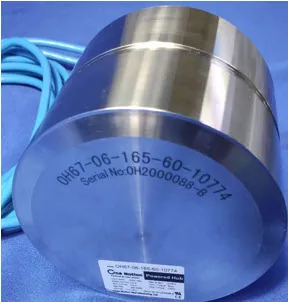
Enter One Motion Powered Hubs. Our hubs use direct drive rotary motion to drive the belt directly, no gearboxes, no external bearings, no maintenance. The benefits are clear:
- Compact Design: Eliminates bulky components.
- Hygienic & Washdown Ready: IP69k rating for food environments.
- Energy Efficient: Magnetic direct drive reduces losses.
- Reliability: Thousands installed since 2017, outperforming traditional systems.
Step 2: Powered Arrays – From Impossible to Scalable
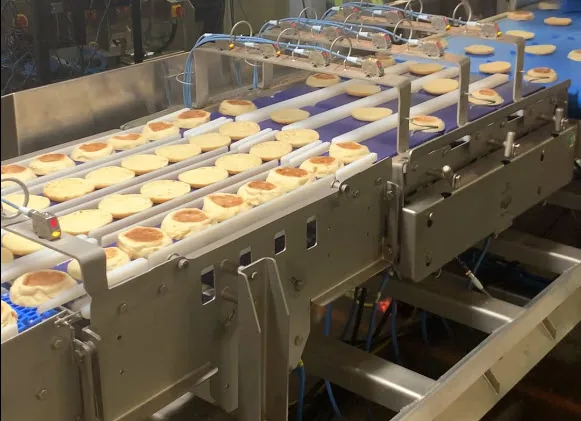
Powered hubs unlock something traditional systems simply can’t: tight belt spacing. With servo/gearbox assemblies, placing belts side by side is nearly impossible. But with powered hubs, we can build powered arrays, multiple belts driven independently in a compact footprint.
Real-World Examples:
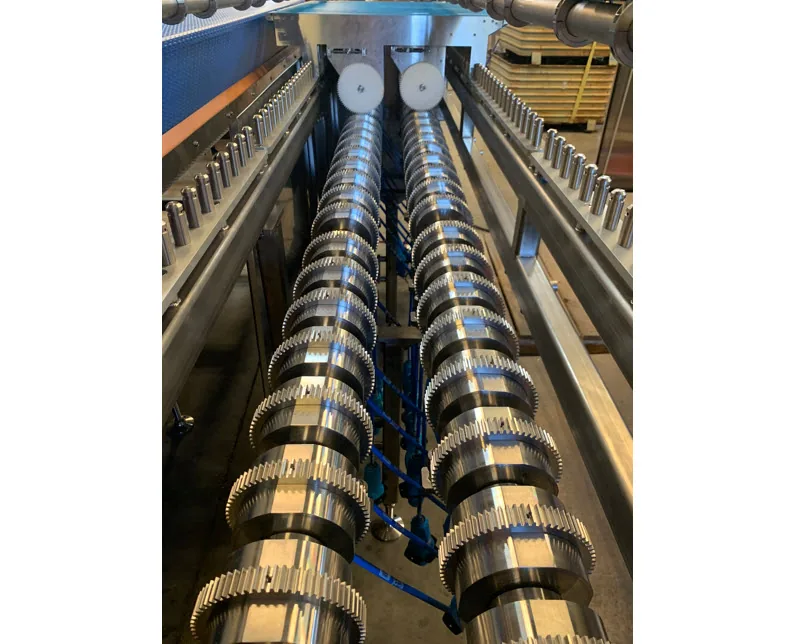
- 27-belt powered array: 27 hubs driving 27 belts side by side.
- 4 × 4 grid: Four powered arrays, each four belts wide, forming 16 belts in a small space, perfect for smart multi-belt feeders.
Why It Matters:
- Space Optimization: High throughput in a minimal footprint.
- Smart Feeding: Independent control for gap closing, timing, and grouping.
- Scalability: From small arrays to massive grids for advanced automation.
The Future of Smart Feeding
Powered hubs and arrays aren’t just an upgrade—they’re a paradigm shift. They simplify design, reduce maintenance, and enable configurations that were once impossible. If you’re designing for efficiency, hygiene, and flexibility, powered hubs are the future.
Learn More: Want to learn more or see these systems in action? Visit onemotion.tech or connect with us to discuss how powered hubs can transform your process.
Found this useful? Share it with your team.