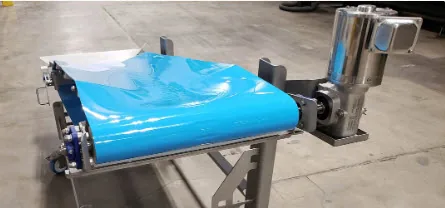
Solving Product Merging Challenges
Why merging product streams is hard in food packaging, from vertical baggers to freezer lanes, and how direct drive belts make compact, on-pitch merges possible.
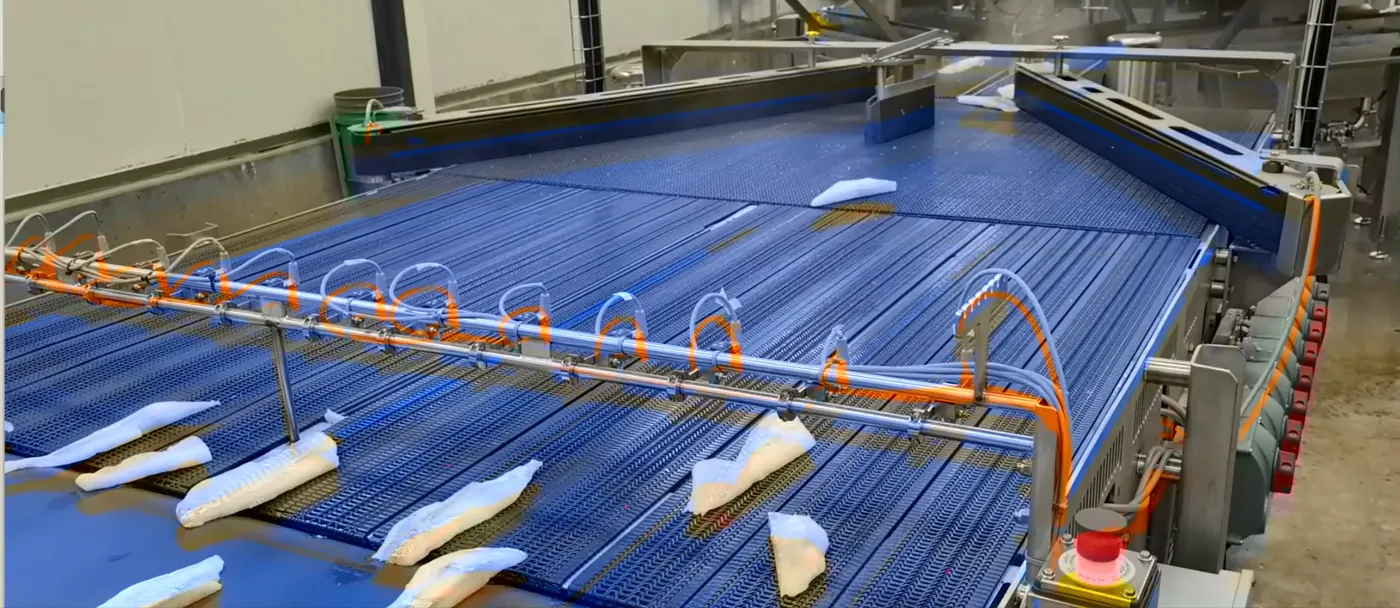
The Hidden Complexity of Merging: Space, Timing, and Conveyor Transitions
In food manufacturing, merging product streams isn’t just about combining lanes—it’s about managing space and timing across multiple transitions. For example, vertical baggers drop product downward, which then needs to be elevated and conveyed to a common merge point. These machines are often several feet apart, creating a physical gap that complicates synchronization.
On top of that, the goal is to deliver a single stream of product on pitch—meaning the spacing and timing between each product is precise. This is critical because secondary packaging systems perform best when products arrive evenly spaced, maximizing speed and reducing jams.
Key Issues by Packaging Type
1. Vertical Bagging Systems
- Products drop vertically, requiring elevation and orientation control.
- Typical layouts have about 9 feet of space from centerline to centerline between baggers, which adds complexity when merging.
- Product orientation must remain consistent across this distance—additional drops or right-angle transfers that rotate the product are not desirable.
- Timing shifts at each transition must be corrected to maintain pitch.
2. Horizontal Flow Wrapping
- Products exit in a horizontal plane but often at high speeds.
- Surging occurs because product feeding into the flow wrapper can vary substantially, creating inconsistent spacing.
- Requires dynamic timing adjustments and buffering to smooth out variability before merging.
3. Thermoformed Pouches (Roll Stock Machines)
- A single machine produces multiple lanes of product, often in a grid (e.g., 3 wide × 3 long).
- When these groups release together, they create slug flow or surging, where products are touching and enter the conveyor in bulk.
- The merging complexity here is how to fit three rows of conveyors so close together to break slugs into an on-pitch stream.
- One Motion’s Multi-Drive and Powered Assemblies are designed for this challenge, enabling ultra-compact layouts and precise control.
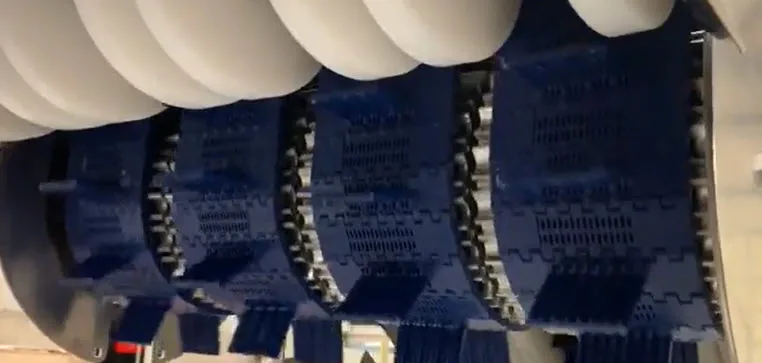
4. Product Delivered from a Freezer or Cooling System
- Can be packaged product or raw product exiting a freezer or cooling tunnel.
- Baked products, for example, may be cooled but not frozen.
- Typically exits in individual lanes, often four across, but not in rows—each lane is random compared to the next.
- Product orientation is sometimes not guaranteed, adding complexity for downstream packaging.
- Space is a major constraint because these lanes are close together, making traditional conveyor systems difficult to fit.
- Requires systems that can align, orient, and merge random flows into a single on-pitch stream without damaging frozen or delicate items.
Solutions
- Compact Conveyor Layouts: Minimize footprint while elevating or redirecting product.
- Smart Controls & Photoeyes: Detect product position at each transition and adjust belt speeds dynamically.
- Accumulation Zones: Absorb upstream variability before merging.
- Powered Bends for Orientation: When turning products (e.g., 90°) in bagging operations, powered bends maintain orientation.
- Using plastic modular chain, the minimum bend radius must be 2.2 × conveyor width.
- Example: For a 12-inch wide conveyor, the minimum radius is 26.4 inches.
- Note: This requires linear space to achieve, which must be considered in layout planning.
Why It Matters
Every transition introduces timing errors. A well-designed merging system accounts for these changes and ensures a single, on-pitch stream, enabling smooth flow, optimized space usage, and maximum throughput for secondary packaging.
Where One Motion Fits
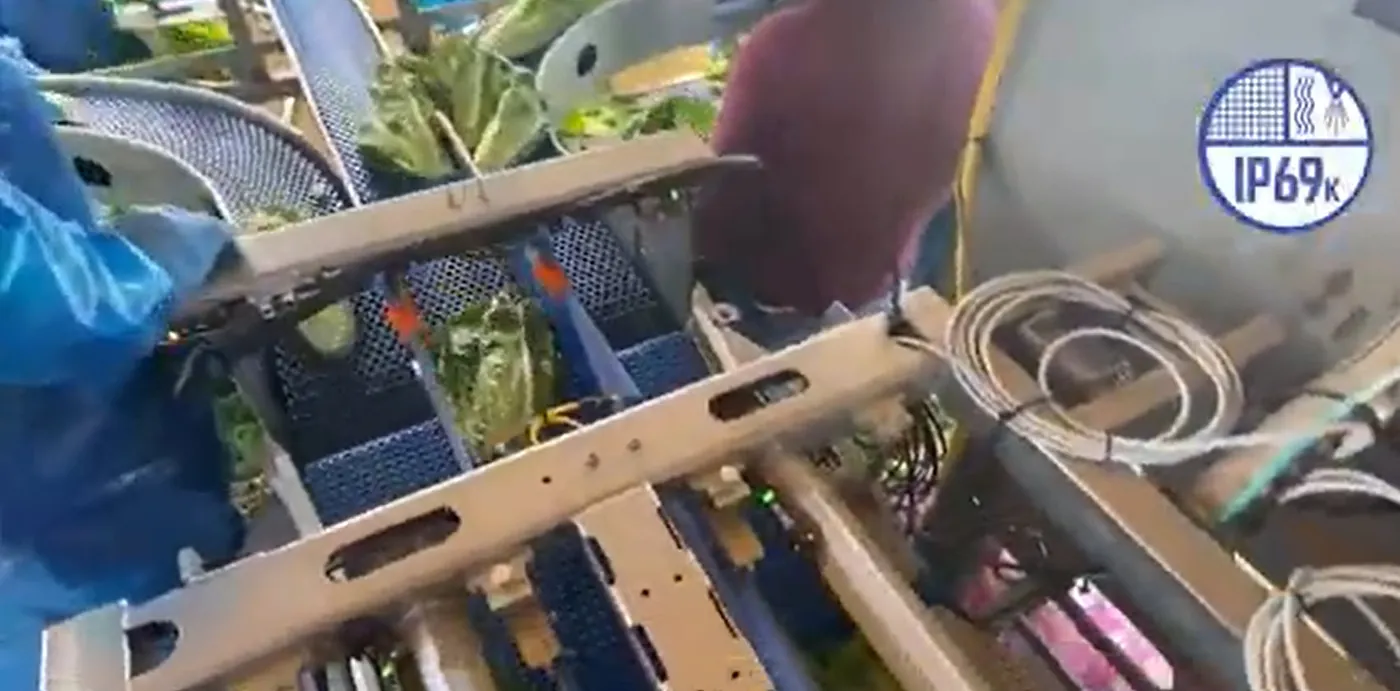
Space constraints are often made worse by traditional merging systems that rely on servo motors and precision gearboxes—not only do these add bulk, but they are very expensive solutions, especially in Ready-to-Eat (RTE) environments and other areas requiring hygienic, sanitary designs.
One Motion’s Direct Drive Rotary technology was purposely designed for these applications—eliminating gearheads and power transmission components while providing direct control of the belts. This means smaller footprints, fewer parts, and precise motion control for merging systems where space, timing, and sanitation are critical.
What merging challenges have you faced in your operations? Tell us about your line to learn how One Motion can help optimize your layout.
Found this useful? Share it with your team.