Switching from Gearbox Systems to Direct Drive: What You Need to Know
Redefining rotary motion in hygienic food manufacturing is now possible with breakthrough technology that significantly enhances the industry. This innovation cuts power consumption by over 50%, eliminates maintenance needs, and triples reliability. The advancements in this technology promise to elevate operational efficiency and sustainability within the sector.
When considering a transition from a traditional motor-plus-gearbox setup to a direct drive solution, it’s essential to think like the plant and maintenance teams who work with these systems every day. The goal isn’t simply “remove gearbox, add direct drive.” It’s about understanding why gearboxes exist and how direct drive technology changes those assumptions.
Why Gearboxes Are Common in Food Manufacturing
In most food plants, gearboxes aren’t just a convenience—they solve real operational challenges:
· Speed Reduction: Standard AC motors run fast—much faster than conveyors, mixers, or pumps require. Gearboxes slow that speed down to a usable range for your process.
· Standard Motor Sizes: Plants often stick with ½ HP or 1 HP motors because they’re mass-produced, easy to source, and cost-effective, even if the torque requirement is lower. It’s cheaper to buy a common motor and add a gearbox than to source a specialty motor. Bonus: Using standard motor sizes reduces spare parts inventory. One motor type can fit multiple applications when paired with different gear ratios.
· Torque Multiplication: Gearboxes don’t just slow things down—they boost torque. For example: A 1 HP AC motor produces about 4 N·m (≈ 2.95 ft·lb) of torque. Add a 10:1 gearbox, and that torque jumps to 40 N·m (≈ 29.5 ft·lb). That extra torque is critical for heavy loads like dough mixers, conveyors with product accumulation, or augers.
2. What Changes with One Motion’s Direct Drive
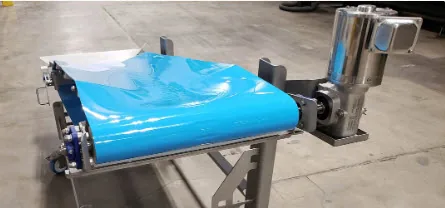
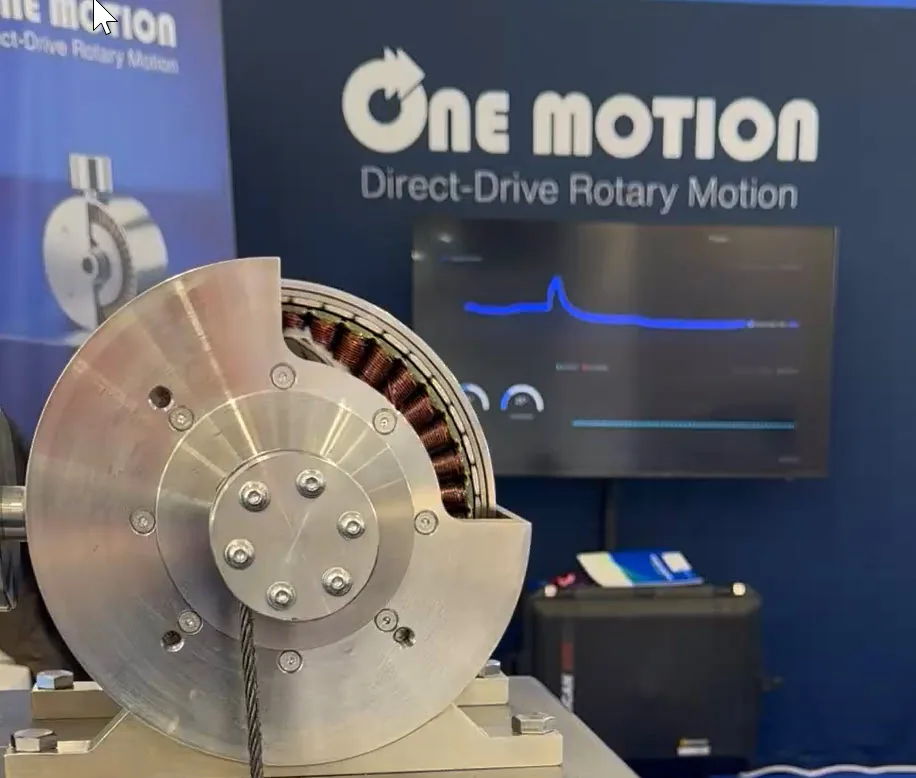
One Motion’s Direct Drive Rotary SideDrive eliminates the gearbox entirely. Instead of starting with a high-speed motor and slowing it down, the direct drive delivers the exact speed and torque you need at the shaft.
Benefits include:
· No gear ratio calculations, wide speed range
· No gearbox maintenance (lubrication, seals, wear)
· A more compact footprint, 40% less volume
· Zero maintenance in washdown environments
· Electric Power consumption reduced by more than 50%
3. Key Considerations for Your Application
Before making the switch, review these factors:
· Speed Range: Confirm the operating speed required. Direct drives can be programmed to match your process without mechanical reduction.
· Torque Requirements: Direct drive provides high torque at low speeds without needing a gearbox.
**· Mounting & Integration:**Check space constraints and shaft alignment. Direct drives often simplify layouts but may require bracket adjustments.
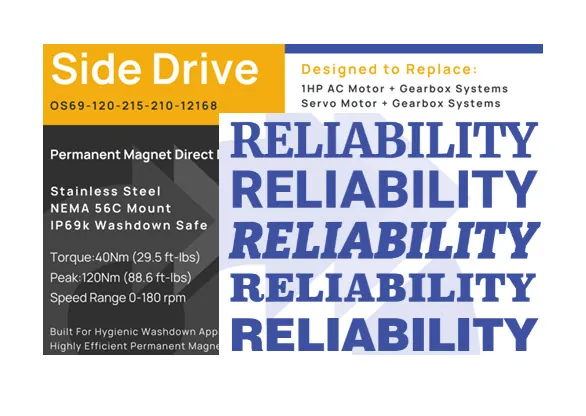
· Electrical vs. Mechanical Trade-Off: While the motor in a gearbox system is inexpensive, the gearbox adds cost and complexity. Direct drives shift that investment into the motor itself but reduce long-term maintenance and downtime. Example: One Motion’s SideDrive offers a six-year service life in washdown conditions, compared to one year for conventional AC motors.
4. Practical Steps for Implementation
· Identify the current gearbox ratio and output speed.
· Match the direct drive’s programmable speed range to your process.
· Verify torque requirements, especially if replacing a high-ratio gearbox.
· Plan for mounting changes and electrical integration.
One Motion’s SideDrive PN: OS69-120-215-12168 can replace gearboxes with ratios up to 30:1.
5. Electrical Requirements
A Variable Frequency Drive (VFD) with Permanent Magnet / Synchronous motor capability is required. Most major manufacturers include this feature in their standard models.
6. Training and Support
Actionpaq provides free onsite training for technical staff on Direct Drive Rotary Motion Technology. This ensures your team is ready to maximize the benefits of the new system.
Found this useful? Share it with your team.