Streamlining Motion Efficiency: The Case for Direct-Drive Technology
In the world of automation, every millisecond matters. Traditional powertrain systems often waste energy moving their extensive components. Discover how direct-drive technology, specifically One Motion's MagDrives, optimizes efficiency by minimizing unnecessary power consumption, leading to a seamless and reliable operation that focuses on the task at hand.
The Downside of Traditional Powertrain Systems
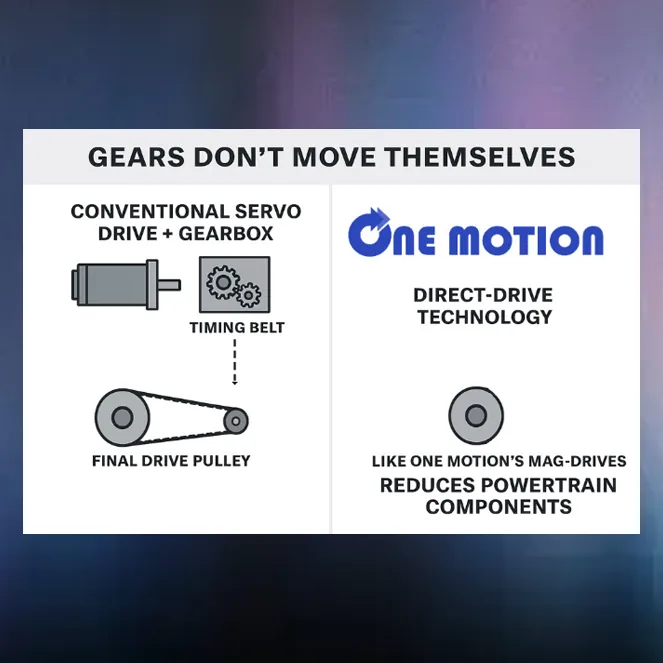
Traditional servo drive and gearbox combinations have been a mainstay in industrial applications for years. However, in scenarios where rapid, repeated movements are critical, like one requiring a 100-millisecond motion every second, these systems show their limitations.
- Major energy consumption is due to moving the bulky components rather than performing the required work.
- Additional wear and complexity reduce system reliability over time.
Introducing Direct-Drive Rotary Motion Technology
Direct-drive technology, such as the innovative One Motion’s MagDrives (opens in a new tab), is designed to streamline processes by eliminating unnecessary components. By directly connecting the motor to the application, this technology offers several advantages:
“Direct-drive rotary motion systems minimize energy waste by focusing solely on the necessary output, thus enhancing overall efficiency.”
- Reduces the complexity and weight of the assembly.
- Increases energy efficiency, leading to cost savings.
- Decreases mechanical failure risks due to fewer moving parts.
Revolutionizing Rotary Motion: Why Direct Drive Matters
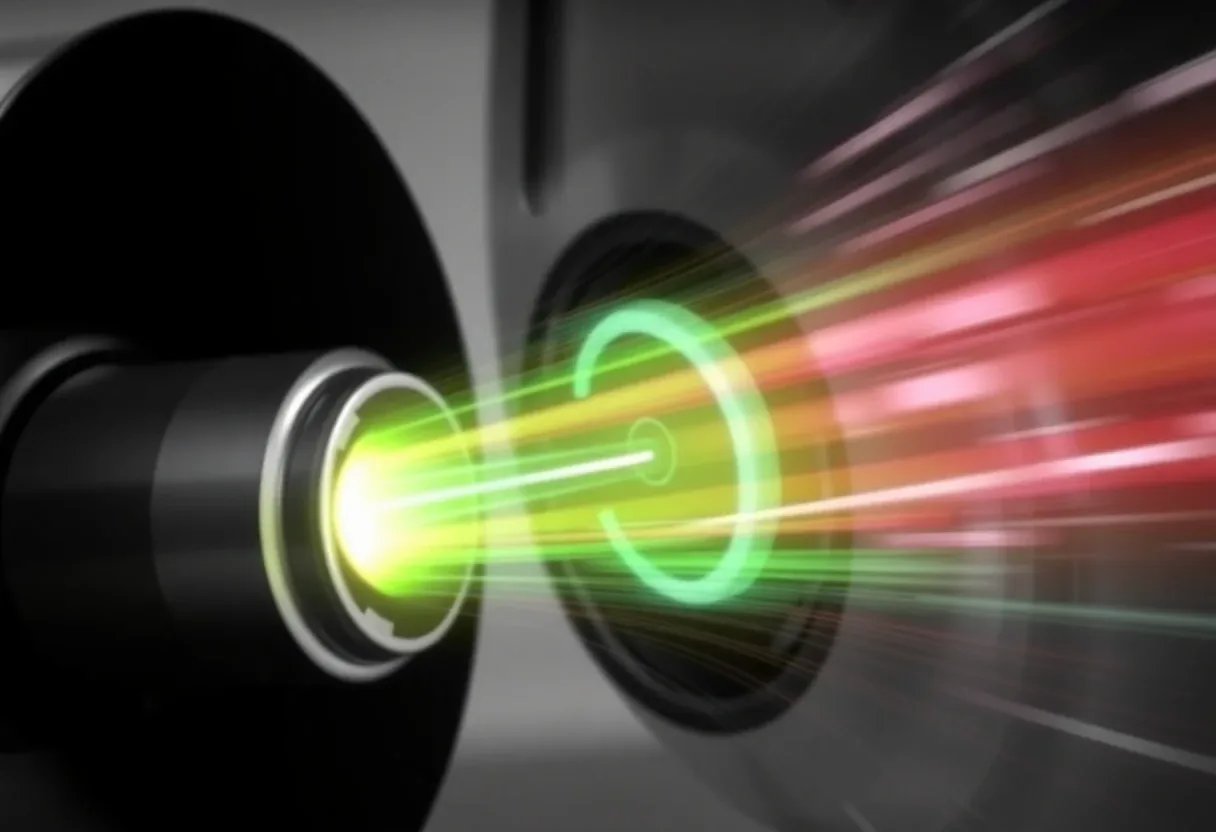
Say goodbye to gearboxes and hello to simplicity. One Motion’s MagDrive direct drive technology is changing the game for rotary motion. Traditional AC motors with gearboxes bring complexity, maintenance, and contamination risks. Our solution delivers:
✅ Hygienic Design – IP69K washdown-ready, no oil, no gearbox.
✅ Precision & Efficiency – Servo-like control without encoders, open-loop with VFDs. Facilitates rapid, precise movements crucial for high-frequency operations.
✅ Lower Cost & Maintenance – Fewer parts, zero lubrication, smaller footprint.
✅ Energy Savings – Energy-dense, high-performance magnetic arrays deliver direct-drive rotary motion, eliminating mechanical losses and integrating highly efficient electric-to-mechanical energy conversion.
Industries Where Direct Drive Is Standard or Widely Adopted
1. Aviation & Aerospace
- Used in actuators, flight control systems, and gimbals for satellites and antennas.
- Benefits: High precision, zero backlash, reliability in extreme conditions. [ (opens in a new tab)automate.org (opens in a new tab)[]](https://www.automate.org/motion-control/blogs/direct-drive-motors-how-they-work-and-best-applications (opens in a new tab))
2. Defense
- Critical for turret drives, radar positioning, and missile guidance systems.
- Benefits: Dynamic motion, rugged reliability, and maintenance-free operation. [ (opens in a new tab)automate.org (opens in a new tab)[]](https://www.automate.org/motion-control/blogs/direct-drive-motors-how-they-work-and-best-applications (opens in a new tab))
3. Semiconductor & Electronics
- Essential for wafer handling, lithography, and robotics in IC manufacturing.
- Benefits: Nanometer-level accuracy, smooth motion, and contamination-free design.
4. Robotics & Automation
- Common in industrial robots and precision assembly systems.
- Benefits: High torque at low speed, compact design, and energy efficiency.
5. Machine Tool Industry
- CNC machines, servo presses, and high-speed machining centers.
- Benefits: Improved stiffness, accuracy, and reduced lifecycle costs.
6. Medical Technology
- Imaging systems, surgical robots, and diagnostic equipment.
- Benefits: Quiet operation, precision, and reliability in sterile environments.
7. Renewable Energy
- Gearless wind turbines use direct drive for efficiency and reduced maintenance.
- Benefits: Lower mechanical losses and higher reliability in harsh conditions.
8. Consumer & Industrial Equipment
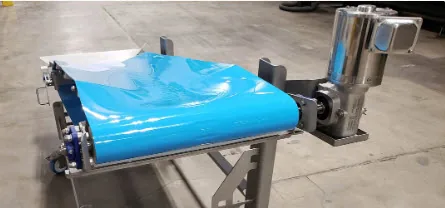
- Washing machines, fans, and conveyor systems increasingly adopt direct drive.
- Benefits: Compact design, low noise, and energy savings. [ (opens in a new tab)en.wikipedia.org (opens in a new tab)[]](https://en.wikipedia.org/wiki/Direct-drive_mechanism (opens in a new tab))
Why These Industries Adopted Direct Drive
- Precision & Accuracy: Eliminates backlash and mechanical compliance.
- Efficiency: No gear losses, better energy conversion.
- Reliability: Fewer moving parts = less maintenance.
- Compact Design: Smaller footprint for high-performance applications.
Conclusion: The Future of Motion Control
In conclusion, transitioning from conventional powertrain systems to direct-drive technologies like One Motion’s MagDrives can revolutionize industrial operations. By eliminating unnecessary components and focusing on the efficient use of energy, businesses can achieve higher efficiency, reduced costs, and improved reliability.
As we move toward increasingly demanding automation technologies, embracing these smarter, streamlined solutions is not just beneficial—it is essential.
Found this useful? Share it with your team.